Elon Musk often speaks about a dream. He wants to see people living on Mars. Not a few people but one million humans. He believes this is possible by the year 2050. Many listen to him with hope. Others doubt him. Still the idea makes people think about the future.
SpaceX, his company, is working on this dream. They are building a rocket called Starship. This rocket is very large. It can carry heavy loads and many passengers. Musk says thousands of Starships will be needed. Each will carry supplies and people to Mars.
Why Musk Wants a Colony
Musk says life must not depend only on Earth. He calls this a “backup plan for humanity.” If something bad happens on Earth, people can survive on Mars. He talks about threats like war, climate change, or asteroid strikes. His goal is simple in words but hard in action. Make life multi-planetary.
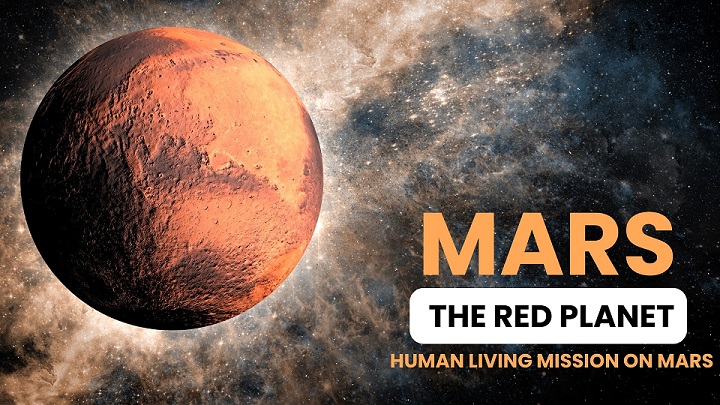
The Timeline
In 2020 Musk shared his timeline. He wanted to build one thousand Starships in ten years. He hoped they could take one million people to Mars by 2050. This would mean three flights a day, every day, for years. It sounds very bold. Many experts say it is too bold.
NASA has its own plans. They hope to send the first humans to Mars in the 2030s. But their mission will be small. Just a few astronauts. They will test if humans can live there for weeks or months. A city of one million people is far more complex.
The Problems on Mars
Mars is not like Earth. The air is thin and full of carbon dioxide. There is little oxygen. The temperature is very cold. Dust storms can last for months. The surface has high radiation. Living there is dangerous without strong protection.
Specialists warn about health. Dr. Robert Zubrin, founder of the Mars Society, says people can survive if we build habitats under ground or with thick walls. But he also says it will cost huge amounts of money.
Radiation is one of the biggest problems. Research by NASA shows astronauts on a long Mars trip could receive radiation far above safe limits. This may cause cancer or damage to the body. Scientists are testing shields and medicines. But no clear answer exists yet.
Food and water are another issue. Carrying them from Earth is not possible for millions of people. Research at MIT shows that a Mars colony must produce food locally. Greenhouses may help. Musk talks about using Martian soil with some changes. But tests on Earth show Martian soil has toxic chemicals. These must be removed first.
Money and Technology
The cost is another barrier. Some experts say a Mars mission for a small crew could cost $500 billion. A colony for a million people would need trillions of dollars. Musk says costs can drop if rockets are reused many times. He believes Starship will make space travel much cheaper.
Technology is still young. Starship has made some test flights. Some were successful. Some exploded. Engineers learn from each test. SpaceX culture is to “fail fast and fix fast.” NASA takes a slower way with more safety steps. Both sides agree progress is happening. But a full Mars city is still far away.
Voices of Experts
Many scientists admire Musk’s courage. Dr. Michio Kaku, a physicist, says Musk has created new energy in space science. He believes humans will reach Mars one day. But he warns the 2050 timeline may be too soon.
Other voices are critical. Astrobiologist Chris McKay from NASA says focus should first be on smaller missions. He says we must learn step by step. If we rush, people may die and support for space may fall.
Research Work
Many universities study Mars. MIT has run models to see how a colony could survive. Their 2014 study showed a colony would run out of oxygen fast if plants and humans shared the same habitat. More research is still needed.
NASA runs experiments in desert areas. They build Mars-like bases in Hawaii and Utah. People live there for months to test food, water, and teamwork. These “Mars analog” missions show how hard isolation can be. Some crew members faced stress and conflict. This proves that psychology is as important as rockets.
Can It Happen by 2050
It is hard to say. The dream is bright. The challenges are very heavy. Experts agree it will take great money, new science, and global effort. Musk is one man but he has pushed the world to think bigger. Even if the goal of one million by 2050 is not reached, progress will come.
Space travel has always seemed impossible until it happened. In 1961 few believed humans would land on the Moon within a decade. Yet it happened in 1969. That gives hope.
Final Thoughts
Elon Musk and SpaceX want to build a new home for humans. A colony on Mars by 2050 sounds like science fiction. But every big step begins as a dream. Research shows the obstacles are real. Radiation, food, cost, and mental health are strong barriers. Yet the work of Musk, NASA, MIT, and many others is moving forward.
Maybe one million people will not live on Mars by 2050. Maybe it will be one hundred or one thousand. But the path has started. And the idea itself has value. It makes us ask who we are and where we wish to go as a species.
Visit meknika for Engineering, Procurement and Realization Services in Poland and Estonia who is the client of softncode.